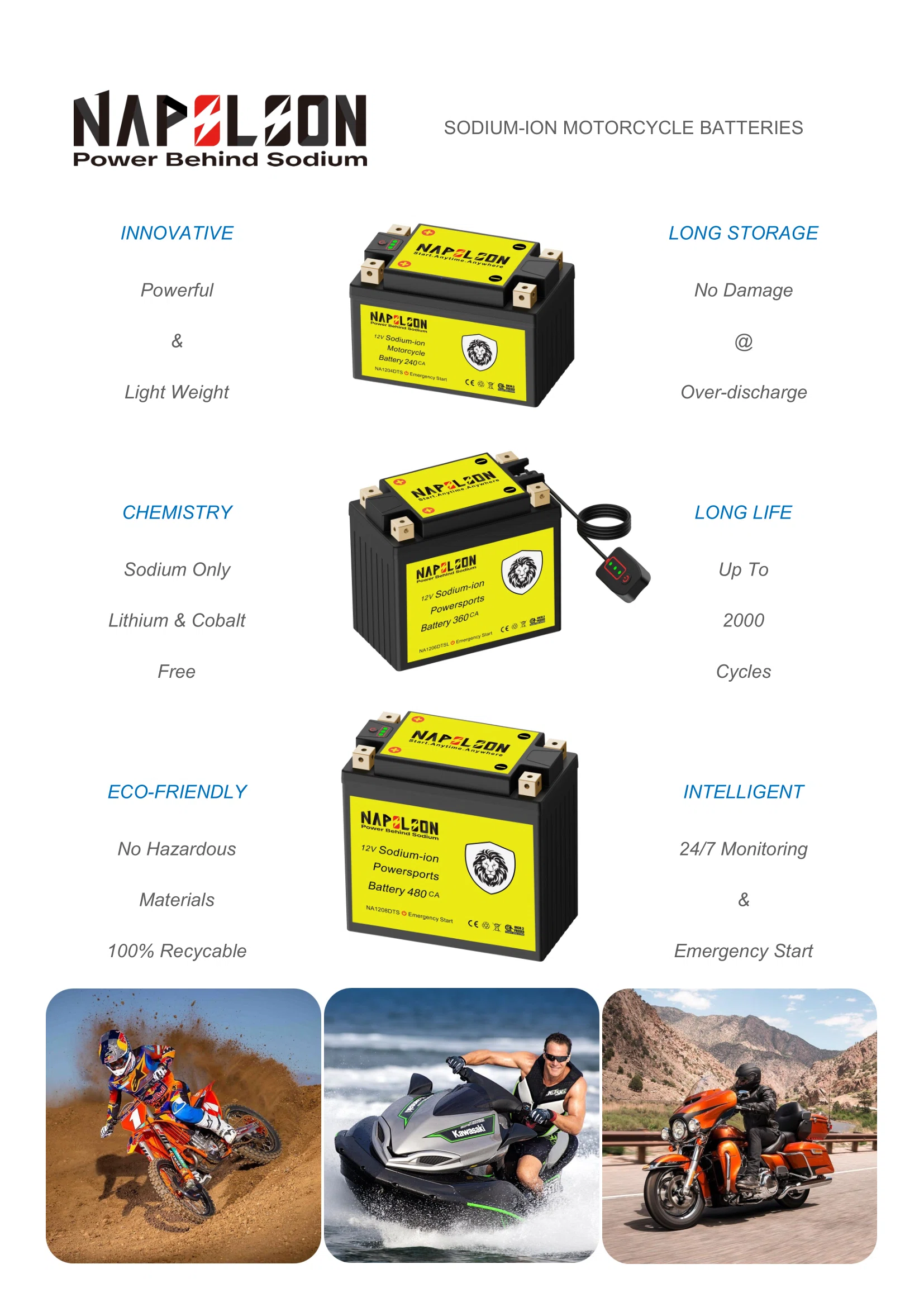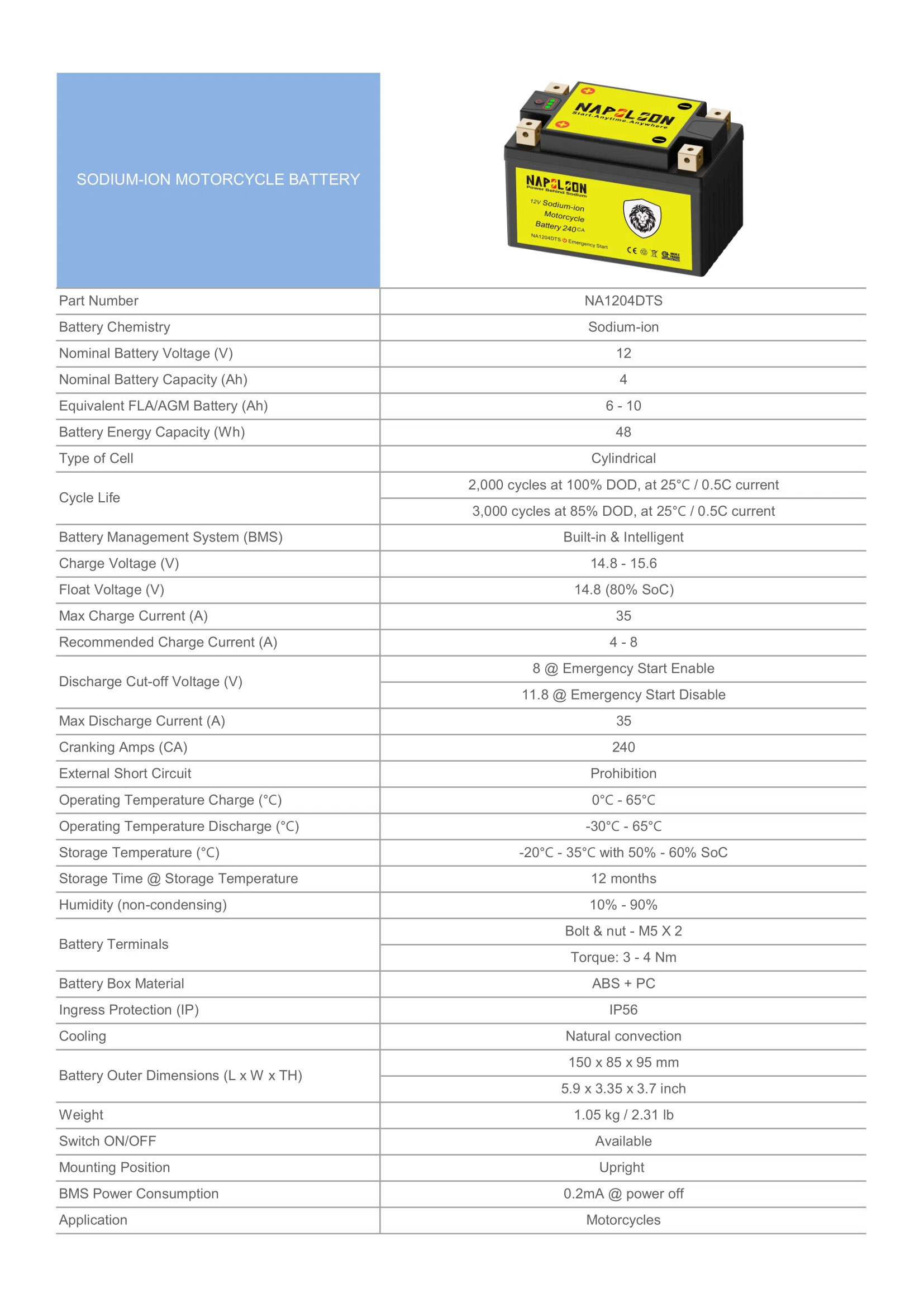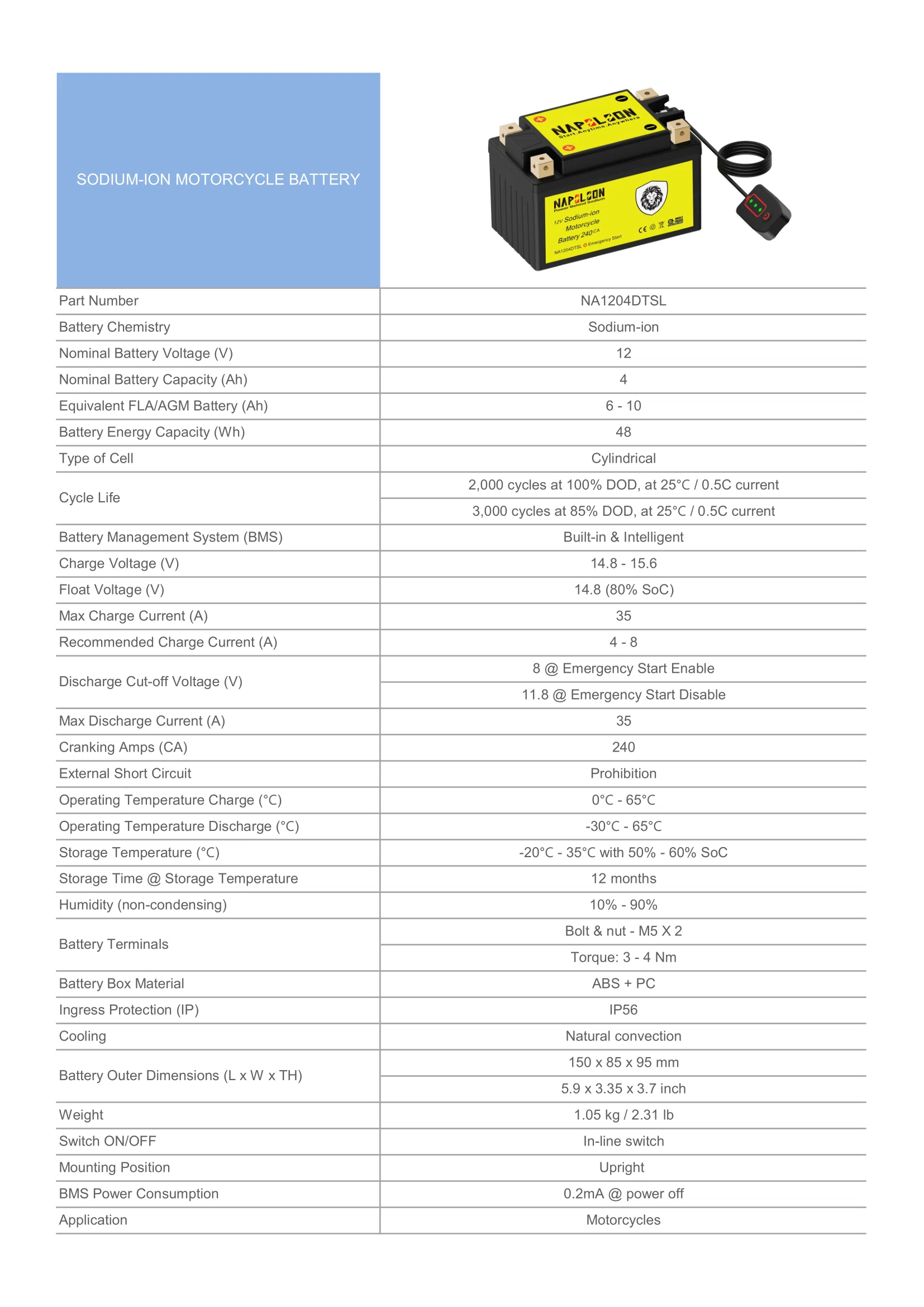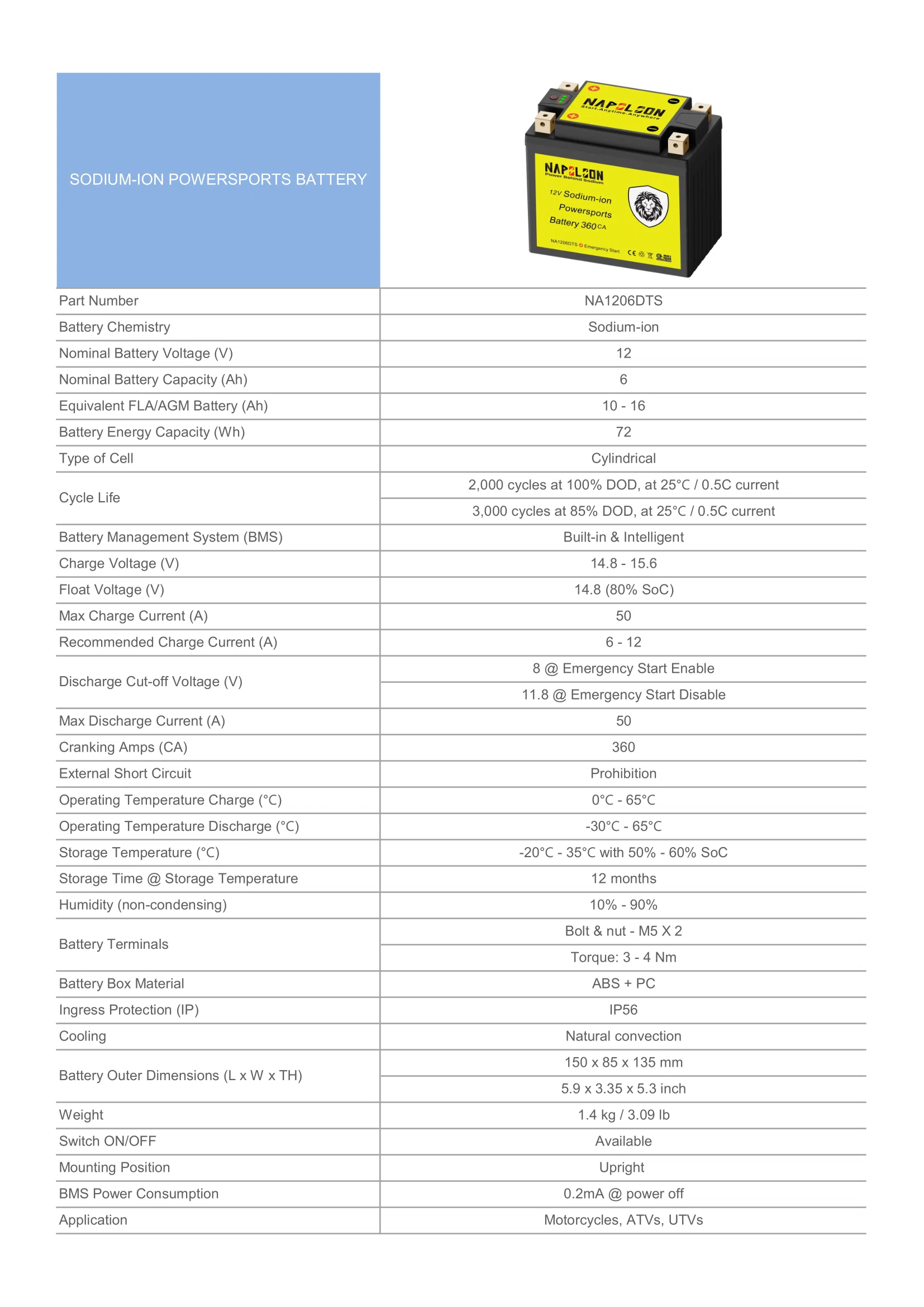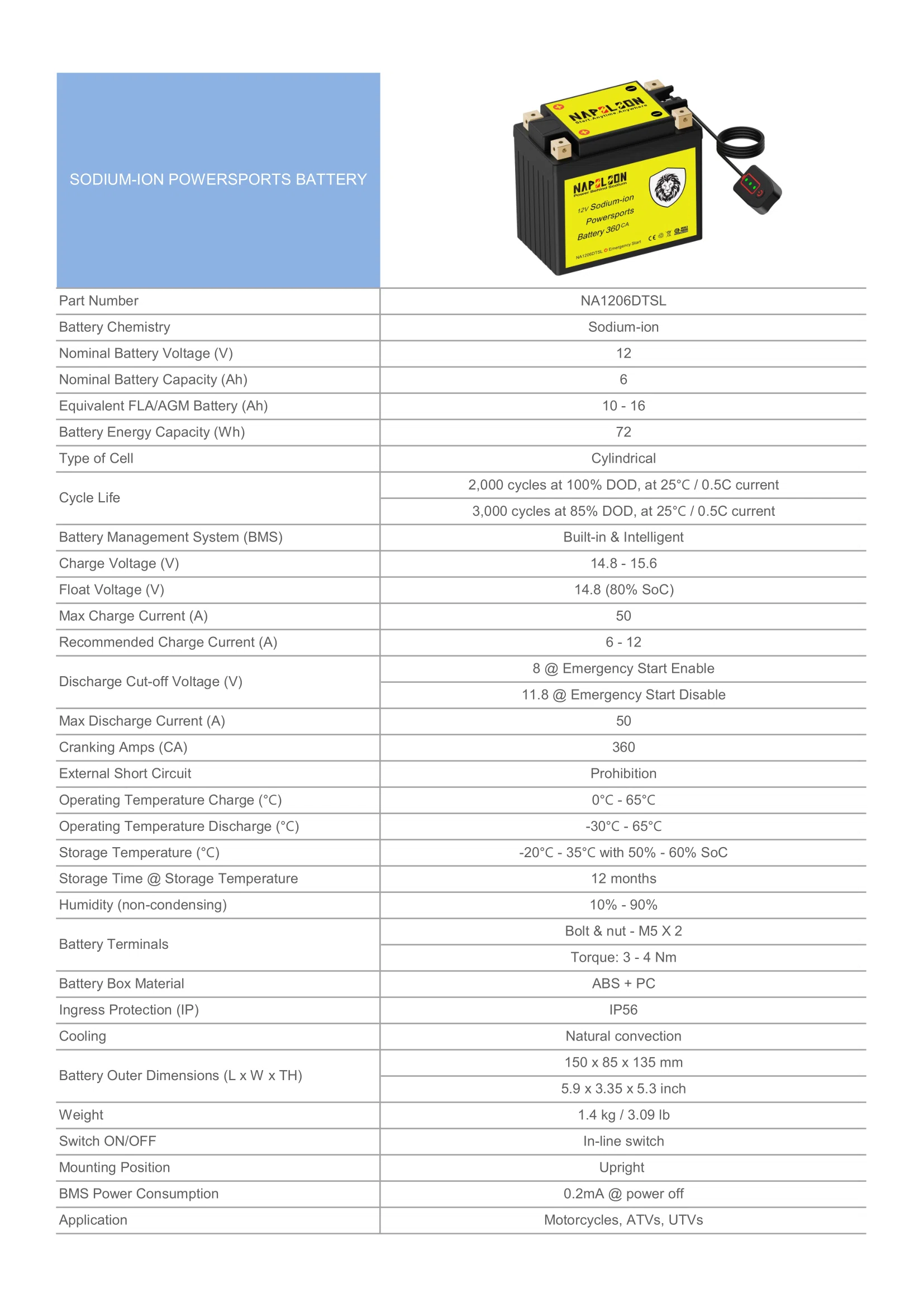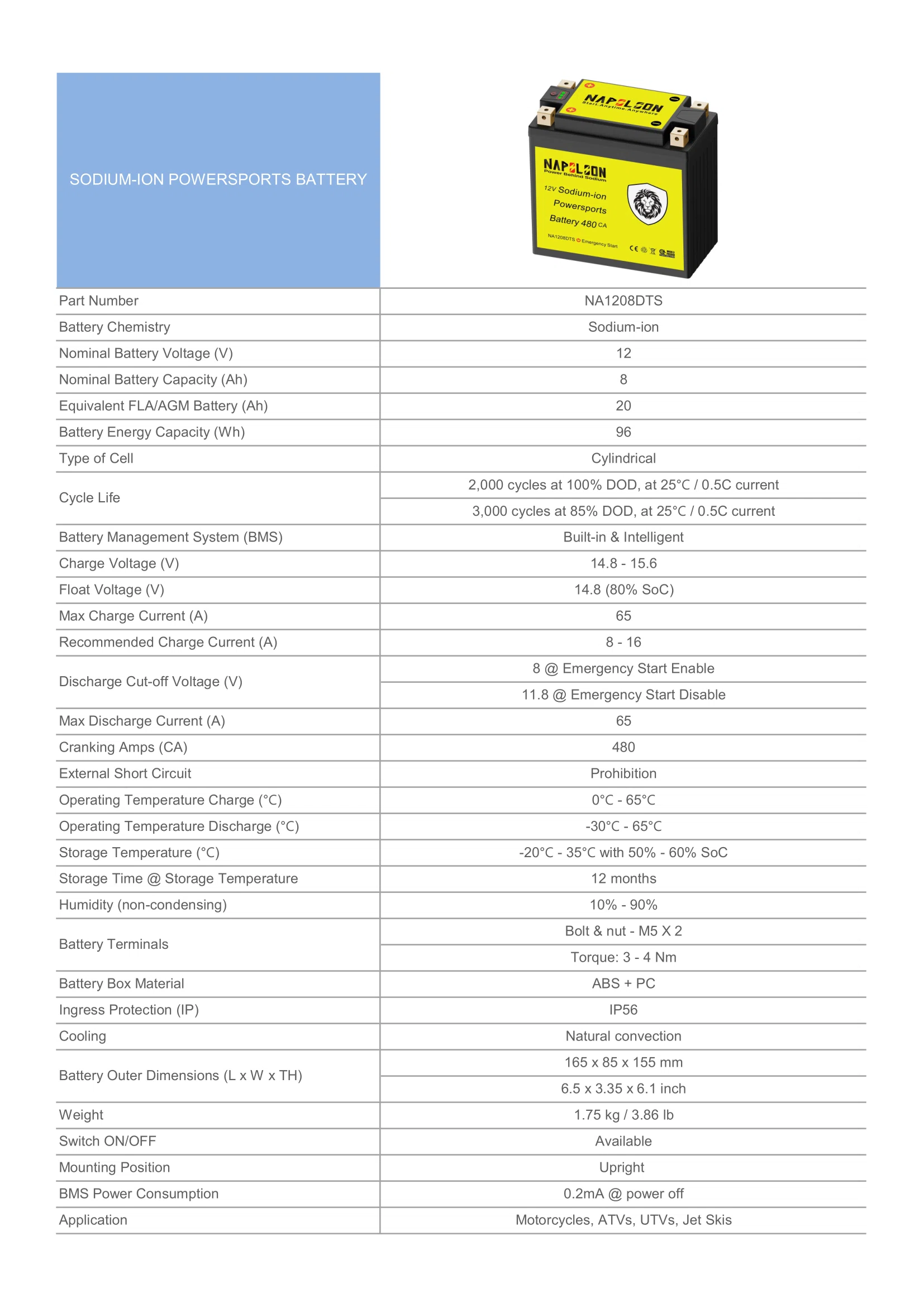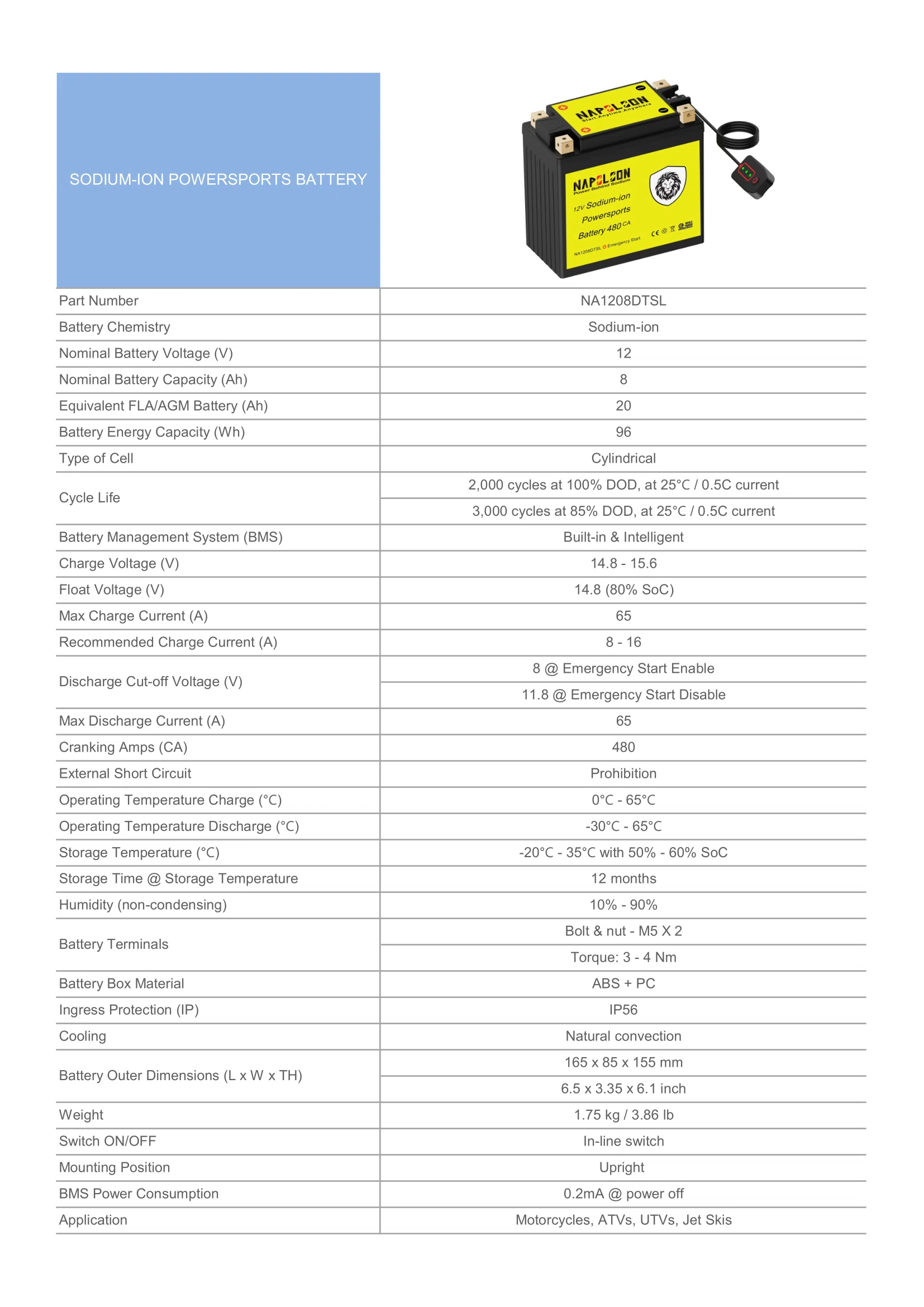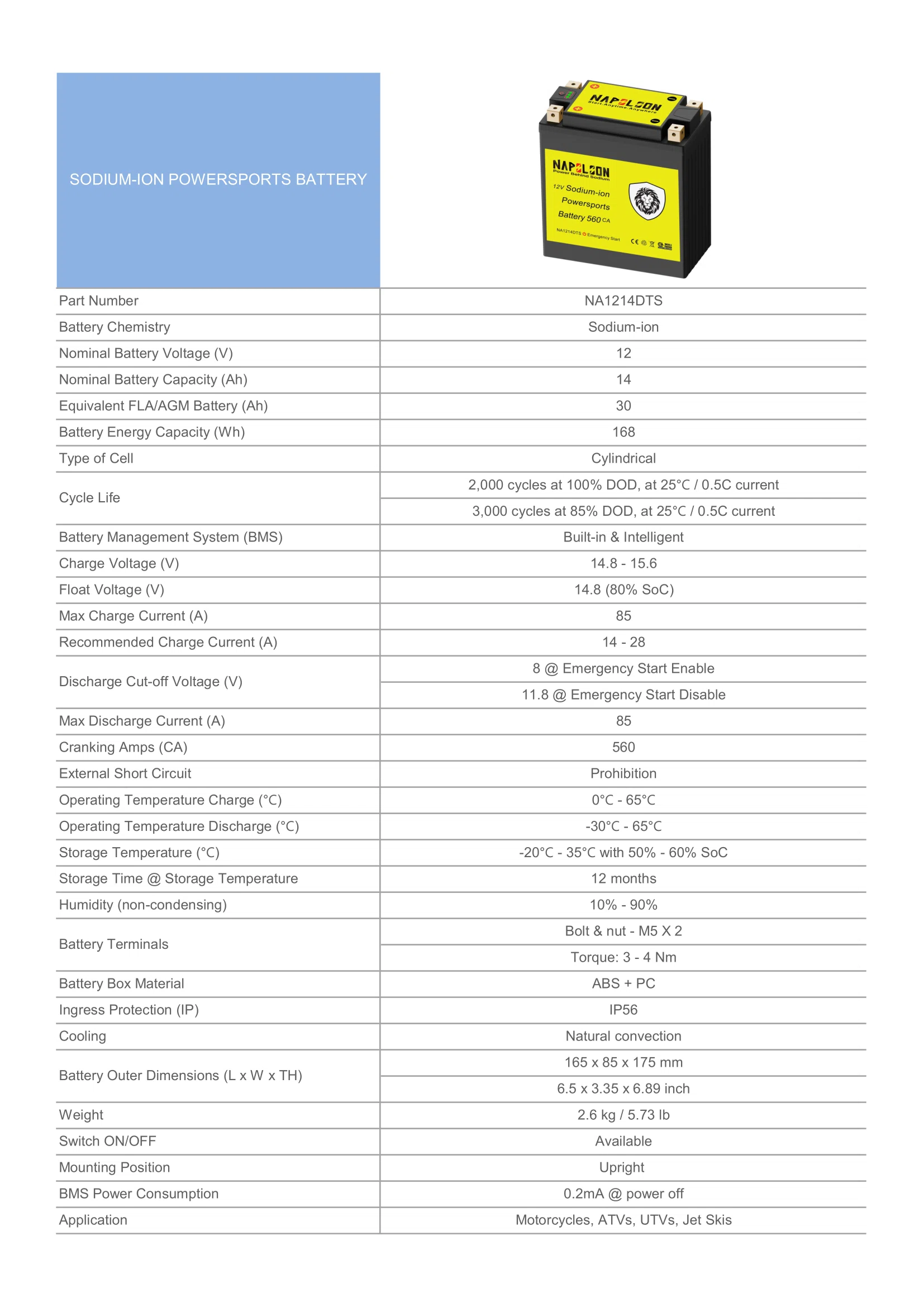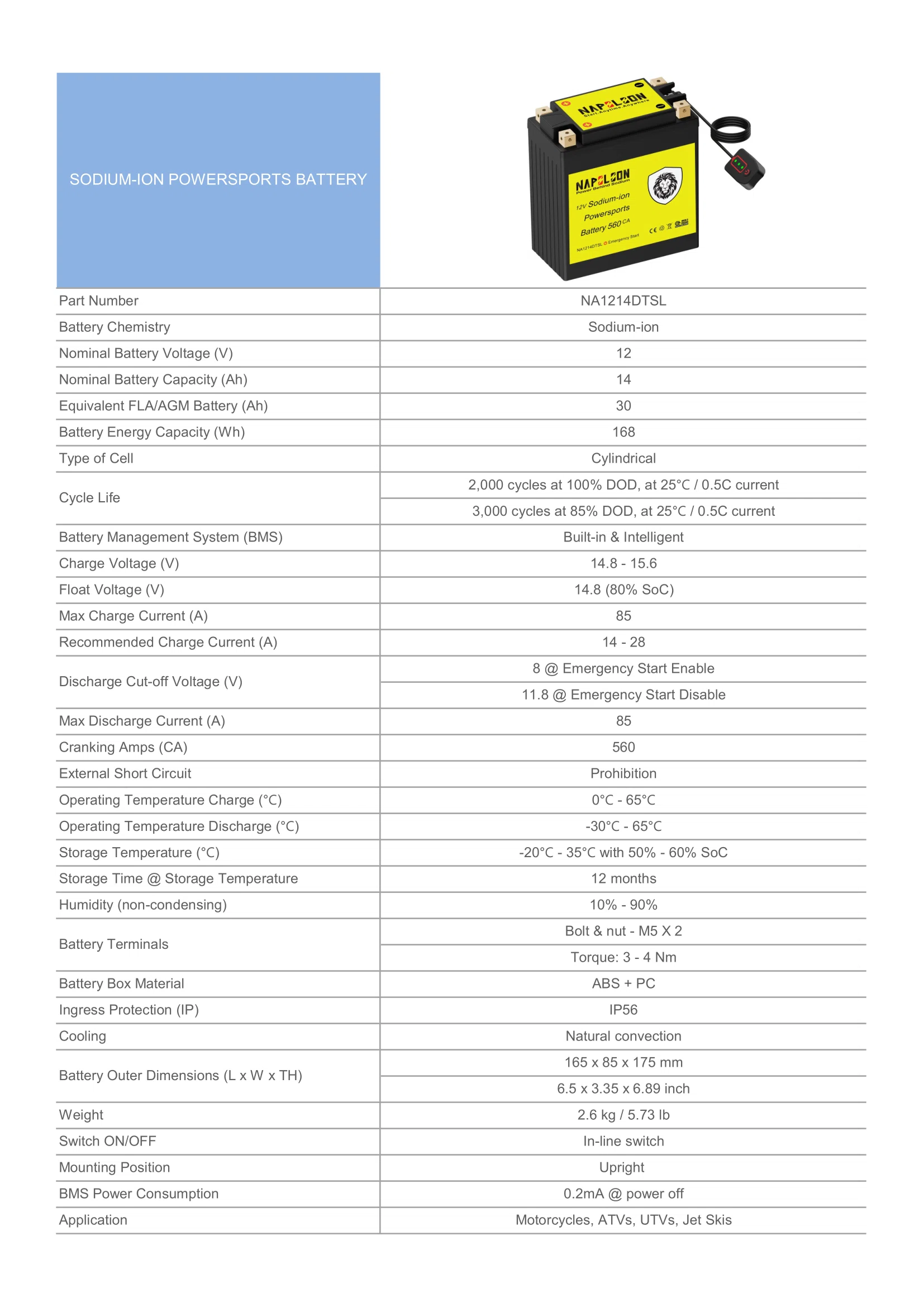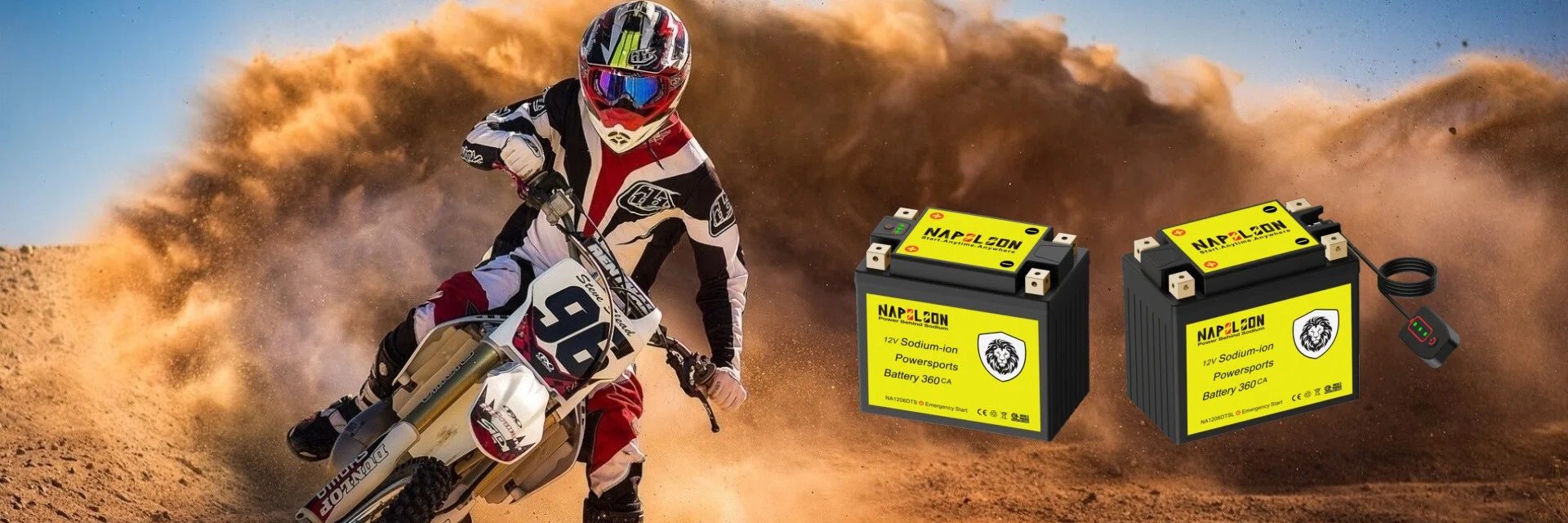
FLA/AGM batteries have been dominated the motorcycle starter battery market for more than one century. Lithium-ion batteries are not good at cold-starting and cannot meet the requirements of starting batteries. Sodium-ion motorcycle batteries have excellent low-temperature performance and can deliver extreme high cold cranking amps at -18 degrees Celsius. In terms of CCA performance, sodium-ion motorcycle batteries are better than FLA/AGM motorcycle batteries.
FLA/AGM motorcycle batteries should strictly avoid over-discharge to prevent irreversible loss on capacity. Whilst Sodium-ion motorcycle batteries are not afraid of over-discharge and even can be discharged to 0V, there is no loss of capacity after recharging. FLA/AGM motorcycle batteries usually need to be charged every 3 months to keep the performance, whilst sodium-ion motorcycle batteries can extend the maintenance to 12 months.
The abundance of sodium in the earth's crust is 2.3%, ranking sixth among all elements, significantly higher than 0.0017% of lithium. Sodium is widely found on land and in the ocean in the form of salt and is easy to obtain. Compared with FLA/AGM motorcycle batteries, sodium-ion motorcycle batteries are eco-friendly. Sodium-ion motorcycle batteries do not contain any heavy metals and are 100% recyclable.
Why and how we designed the innovative and amazing
sodium-ion motorcycle batteries?
Believe it, before you see it.
We believe that sodium-ion motorcycle batteries can challenge the market of FLA/AGM powersports batteries.
Sodium-ion Batteries 101
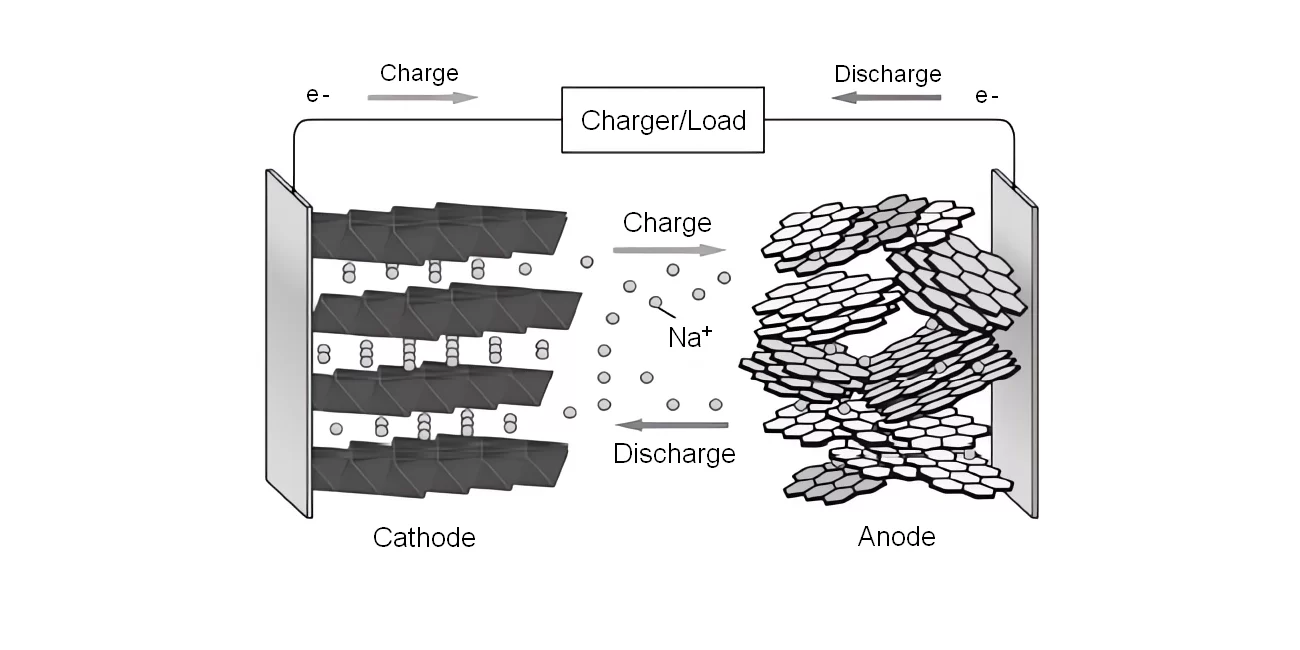
Sodium-ion battery is a secondary battery that mainly relies on the movement of sodium ions between the positive and negative electrodes to work. It has a similar working principle to lithium-ion batteries, and both are called "rocking chair" batteries.
The main components of sodium-ion batteries are positive electrode, negative electrode, separator, electrolyte and current collector, among which the structure and performance of the positive and negative electrode materials determine the sodium storage performance of the entire battery. The positive and negative electrodes are separated by a separator to prevent short circuits. The electrolyte infiltrates the positive and negative electrodes as a medium for ion flow, and the current collector plays the role of collecting and transmitting electrons. During charging, Na+ escapes from the positive electrode, passes through the separator and embeds into the negative electrode, so that the positive electrode is in a high potential sodium-poor state and the negative electrode is in a low potential sodium-rich state. The discharge process is the opposite. Na+ escapes from the negative electrode and passes through the separator and re-embeds into the positive electrode material, restoring the positive electrode to a sodium-rich state. In order to maintain charge balance, the same number of electrons are transferred through the external circuit during the charge and discharge process, and migrate between the positive and negative electrodes together with Na+, causing oxidation and reduction reactions at the positive and negative electrodes.
The Benefits of Sodium-ion Motorcycle Batteries
The abundance of sodium in the earth's crust is 2.3%, ranking sixth among all elements, significantly higher than 0.0017% of lithium. Sodium is widely found on land and in the ocean in the form of salt and is easy to obtain. Currently, the world's proven lithium resource reserves that can be exploited can only satisfy 1.48 billion electric vehicles. As global electrification accelerates, the pressure of lithium resource shortage is further reflected.
After the sodium-ion motorcycle battery has undergone short-circuit, nail, crush and other tests, there is no fire or explosion. Lithium-ion batteries have the problem of over-discharge, which will cause the copper foil current collector to dissolve, resulting in irreversible loss of battery capacity; while sodium-ion motorcycle batteries have no over-discharge, and the positive electrode can be discharged to 0V without affecting performance, making the battery safer during storage and transportation. At the same time, sodium-ion motorcycle batteries are prone to passivation during thermal runaway, so they perform better in safety tests.
The high conductivity of sodium ions requires a lower concentration of electrolyte. The viscosity of the electrolyte at low temperatures is lower than that of lithium-ion batteries, and the overall performance of the battery is better. The normal operating temperature range of sodium-ion motorcycle batteries is -40℃-65℃, and the capacity retention rate at -20℃ can reach more than 85%, which is significantly better than the 60-70% capacity retention rate of lithium iron phosphate batteries.
To help customers understand the differences between sodium-ion motorcycle battery and FLA/AGM motorcycle battery, the NA1208DTS is compared with the YUASA YTX20-BS battery as follows:
Item | NA1208DTS | YTX20-BS |
Battery Chemistry | Sodium | Lead |
Nominal Voltage | 12V | 12V |
Energy Density | 40Wh/kg | 20Wh/kg |
Battery Energy | 96Wh @ 1C discharge | 133Wh @ 1C discharge |
Heavy Metals | Eco-friendly | Lead |
Weight | 2.6kg | 6.8kg |
Charging Temperature | 0 ℃ < T < 65 ℃ | -20 ℃ < T < 50 ℃ |
Discharging Temperature | -30 ℃ < T < 65 ℃ | -20 ℃ < T < 50 ℃ |
No Damage @ Over-discharge | As low as to 0V | 10.5V |
Storage Without Maintenance | 12 months | 3 months |
Cranking Amps (CA) | 480 | 310 |
Life Cycle | 2,000 times | 500 times |
Cost Per Use | $0.1 | $0.25 |
The Intelligent Battery Management System
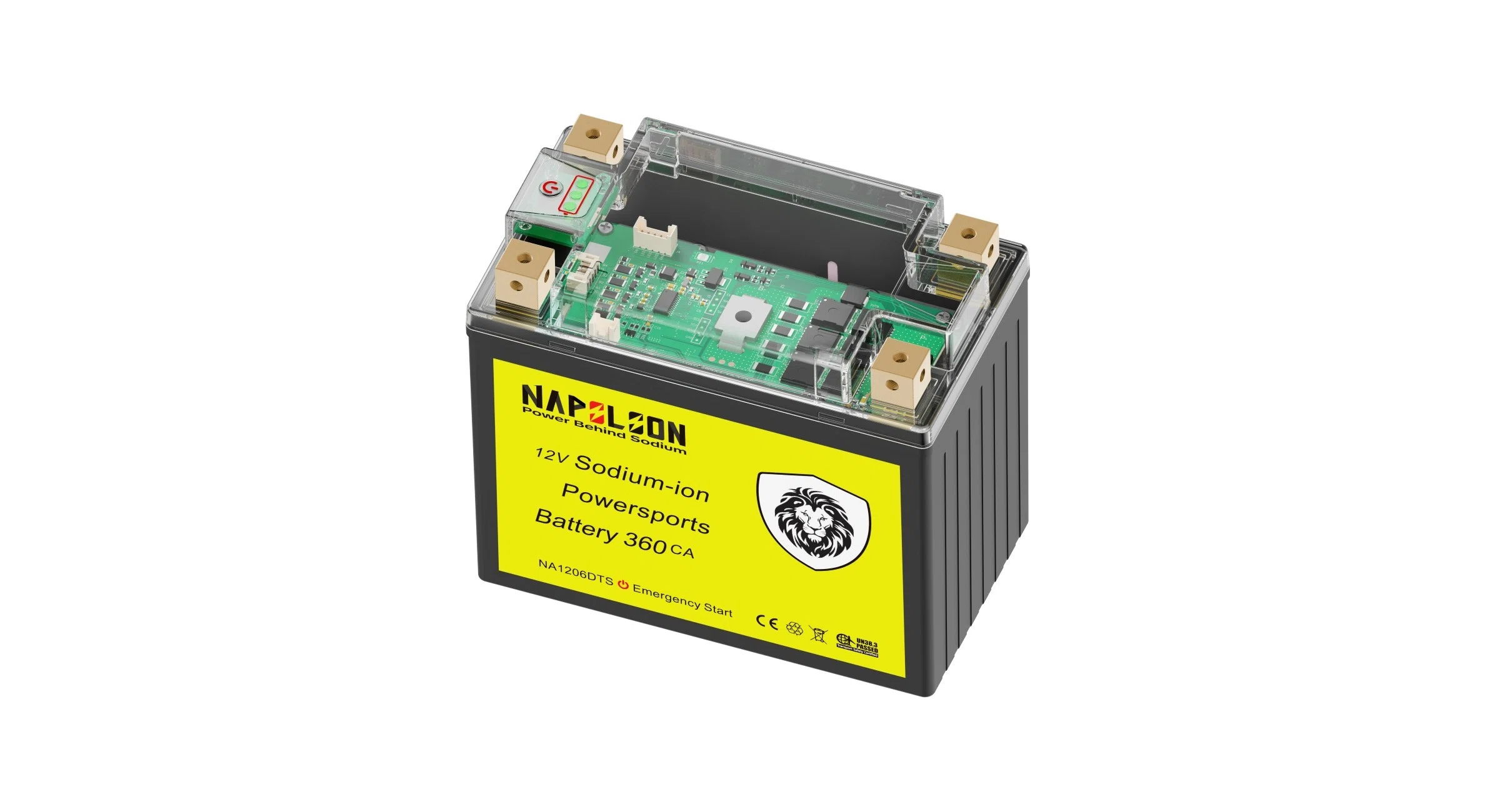
The intelligent battery management system (BMS) enables efficient and safe charge/discharge management and monitoring of sodium-ion cells. By ensuring that the sodium-ion cells operate consistently within their permissible temperature, voltage, and current limits, the intelligent BMS not only effectively extends sodium-ion motorcycle battery's service life but also prevents thermal runaway caused by a lack of monitoring and protection.
The built-in intelligent BMS in NAPILION sodium-ion motorcycle batteries features an Emergency Start function. The BMS dynamically monitors the battery's state of charge (SoC) and automatically cut-off output to prevent low SoC, ensuring the NAPILION sodium-ion motorcycle battery can successfully start the motorcycle again.
The application of NAPILION powersports batteries
NAPILION powersports batteries are designed for drop-in replacement with FLA/AGM batteries on Motorcycles, ATVs, UTVs, Jet Skis, Snowmobiles and Lawn Tractors. The high performance of NAPILION powersports batteries will make a great customer experience.
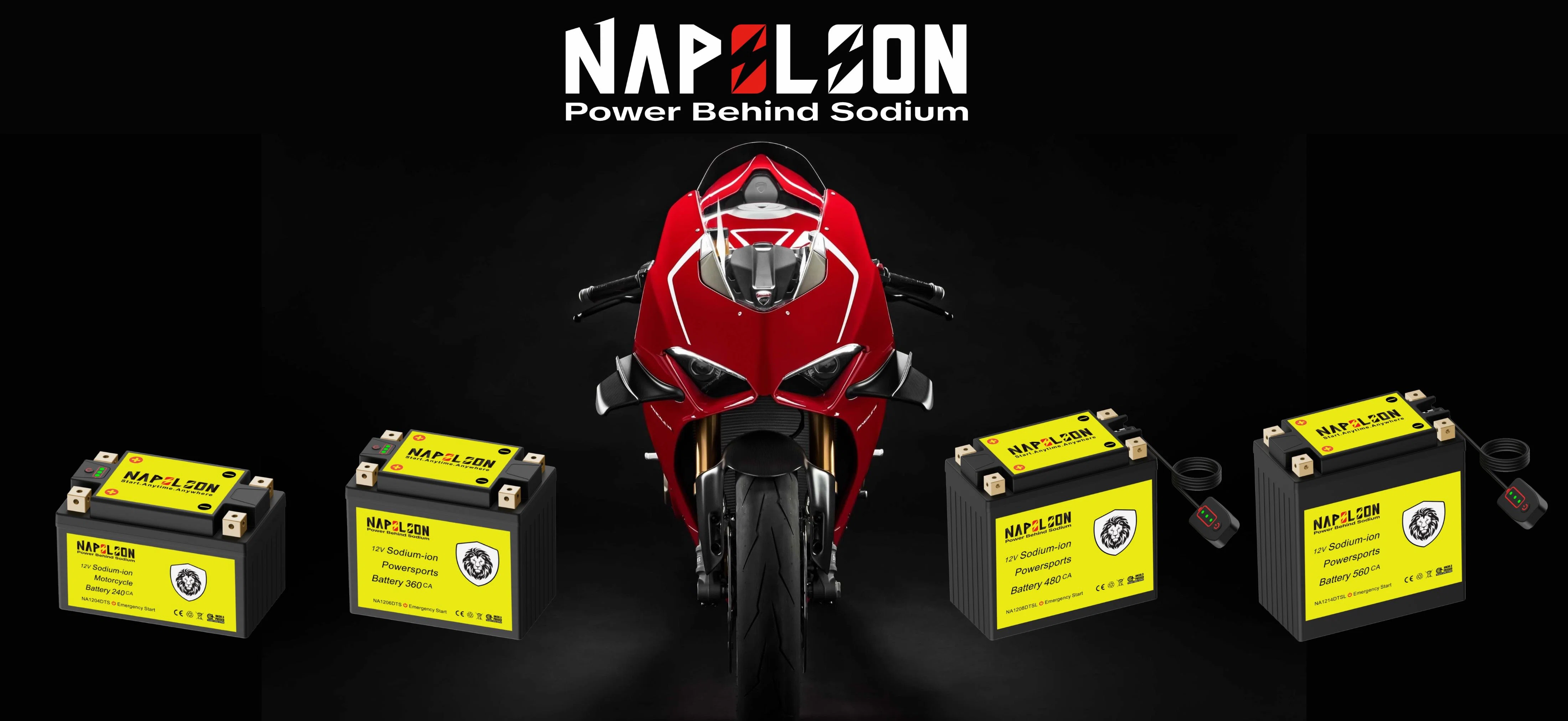
Find out your requested sodium-ion motorcycle batteries in our 2026 catalog.
If you cannot find the proper model. Please leave a message today to customize your battery.